

Death F#$%@*G Stranding (Part Two)
What Death Stranding 2 understood about replacement before we were ready to hear it.

CHAPTER 5: Foundations
A mailperson stops his truck at an Amazon warehouse. they mindlessly start unloading boxes, after the hard part is done, they looks for worker to go over the manifest and sign it, eventually finds one so their business can conclued in the distance looking for someting to catch his eye is a warehouse worker unloading and inspecting the new rotors for their latest models of services drones. Before the mailperson could gather a thought they are rushed out and on to the next delivery, driving away with feeling impressed but also unsettled but dont know why.
Sam Porter Bridges knows.
If you read Part One you already know what I think Death Stranding understands about connection that most games don’t. This is Part Two. Same world. Same mechanics. Different feeling entirely.
Death Stranding 2: On the Beach picks up a year or so after the first game. The infrastructure Sam built is still standing. The roads are there. The bridges are there. The chiral network is humming. And the porters — the human beings who carried things across impossible terrain so strangers could survive — have been replaced by automated carriers built on top of everything Sam delivered with his own body.
You find yourself in Australia now. New land. New people to connect. Same tools. Same mission. Reconnect the fractured territory. Build the roads. Make the deliveries. And I kept playing and kept building and kept connecting and somewhere around hour eighteen something started feeling wrong that I couldn’t name.
It doesn’t feel like being a package handler anymore.
It feels like laying the foundation for something I won’t be invited to see finished.
CHAPTER 6: Memories
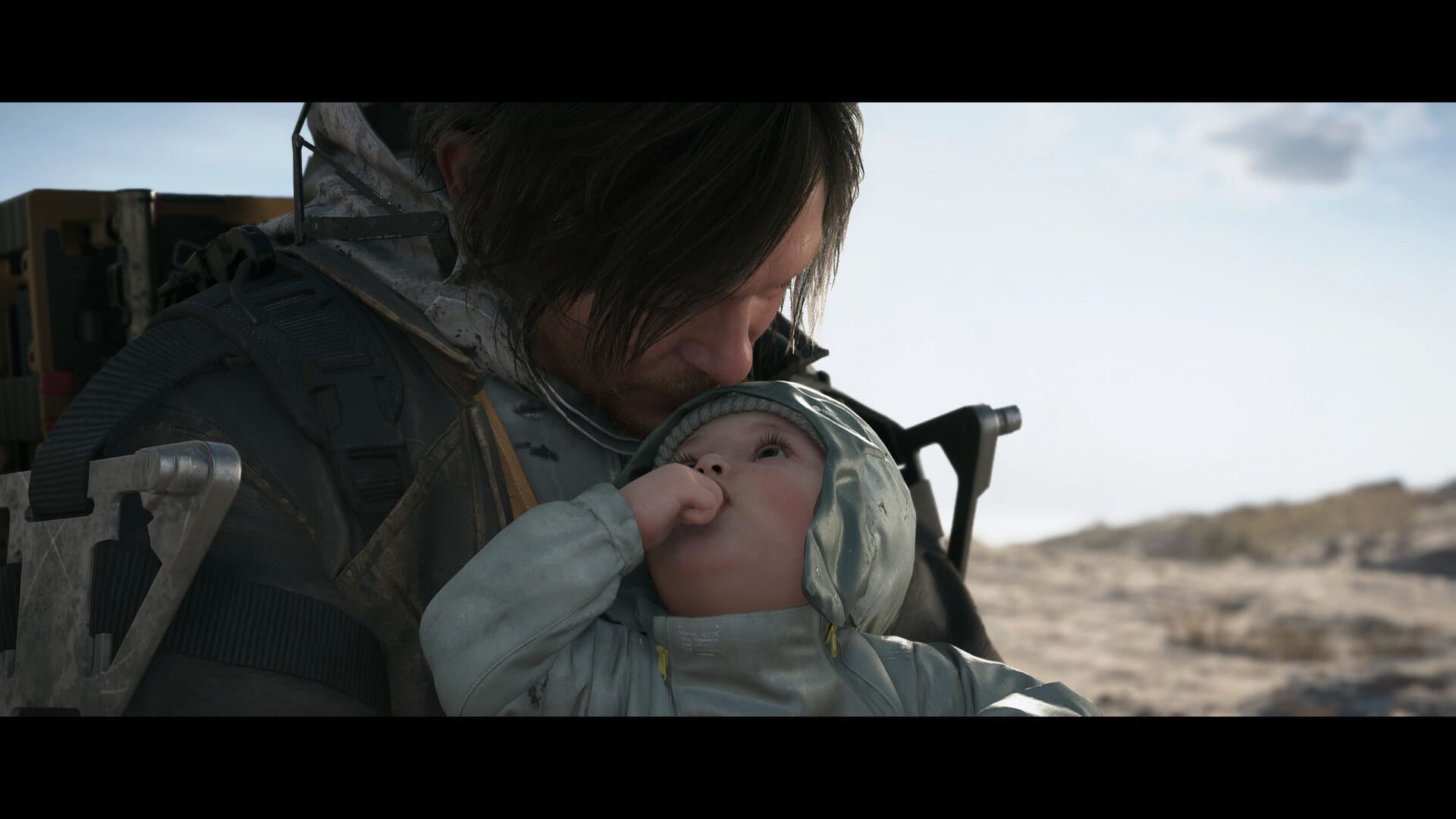
DS2 rewards you for remembering. The game assumes you put in the hours on DS1 and it treats that memory like currency — familiar mechanics, expanded lore, a story layered carefully over the foundation of the first game like a second floor on a house you already know how to navigate. The nostalgia alone was enough to get me back in the truck. Back building roads. Back connecting outposts. Eighty hours of DS1 muscle memory and I was home.
Then I connected half of Australia and stopped.
For the first time since I picked up the controller I asked why. Not why as in what’s the objective. I knew the objective. Why as in what does this mean. What am I actually building here. Because it didn’t feel like DS1 anymore. It felt different. More invasive. Roads no one asked for but needed. Infrastructure laid down in a land that was fractured before I arrived and would be transformed by the time I left.
And I thought about the mailperson again.
Driving away from the warehouse with the rotor glimpse still sitting somewhere in the back of their mind. Impressed. Unsettled. Not knowing why.
I was starting to know why.
CHAPTER 7: STRANDS
There’s a difference between building a foundation and building upon one.
Building a foundation requires connection. You have to know the land. Know the people. Know which door gets knocked on twice because the woman inside is hard of hearing. Know which block respects a nod and which one needs a conversation. Alex knew all of that. Twenty years of refining the route. Adjusting. Learning. Building trust one piece of mail at a time until the foundation wasn’t just a delivery route anymore. It was a relationship between a man and a neighborhood.
Building upon a foundation doesn’t require any of that.
The machine that comes after Alex doesn’t need to know anybody’s name. It needs the address. It needs the package dimensions. It needs the most efficient path between two points. Everything Alex knew that wasn’t in the system — the shortcuts, the relationships, the reason certain people came to the door before he even knocked — none of that transfers. None of that gets uploaded.
But here’s what does transfer. The data Alex generated for twenty years. The patterns. The routes. The behavioral map of a neighborhood drawn one delivery at a time. The foundation Alex built out of genuine human connection becomes the training data for something that was never interested in connection at all.
Do you think Alex ever thought about that?
Do you think the mailperson driving away from the Amazon warehouse thinks about it?
Sam Porter Bridges thinks about it.
Because in DS2 Sam is building in Australia knowing the automated carriers are already running his routes back home. He knows what it means to lay groundwork. He knows what gets lost when efficiency replaces the person who knew why the foundation mattered in the first place.
Could we live in a world where trust isn’t built but replaced with efficiency?
We’re already living in it.
We just haven’t finished delivering all the parts yet.
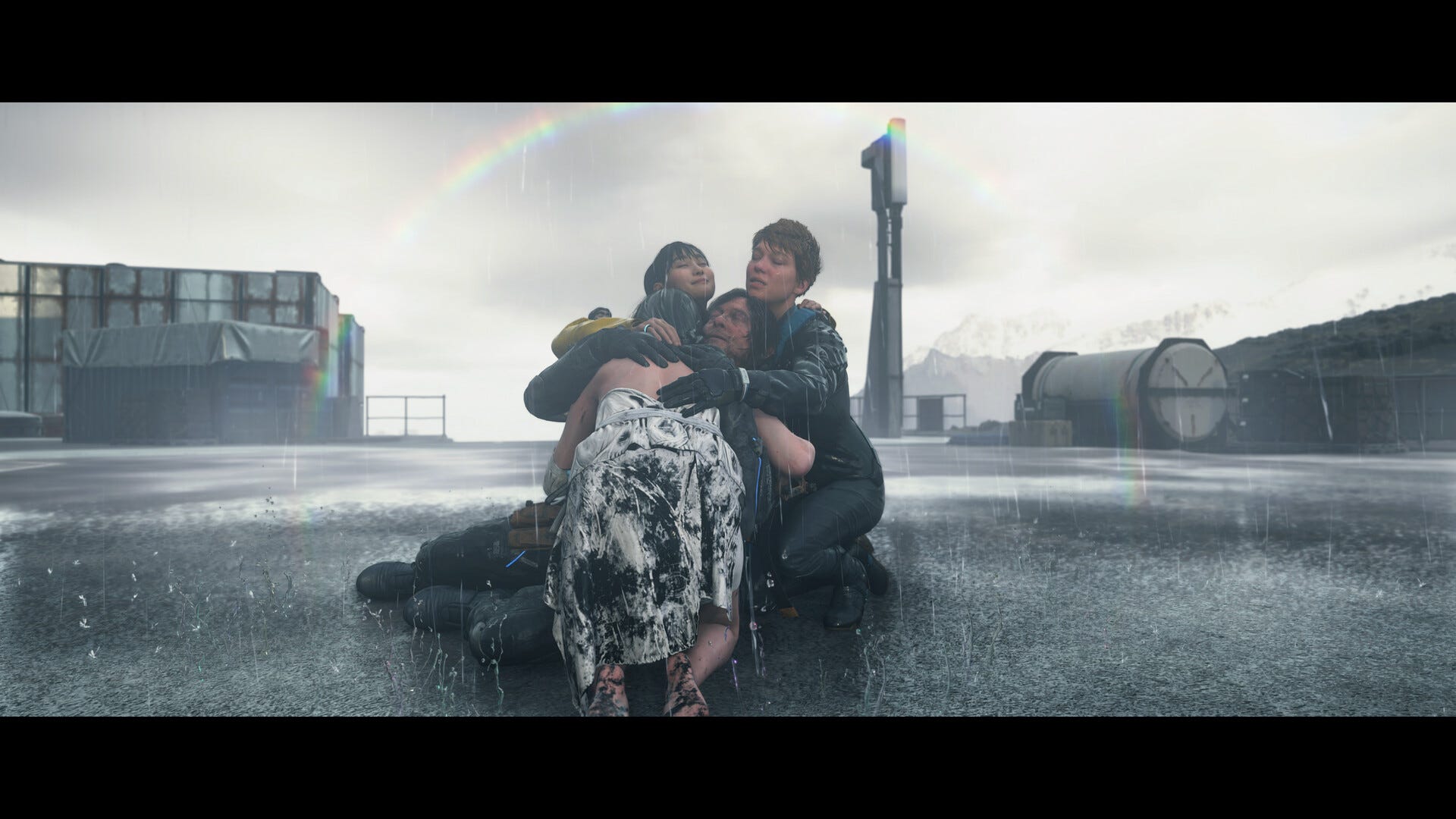
CHAPTER 8: The Beach
The Beach in Death Stranding is where Sam goes when he dies. It’s not heaven. It’s not hell. It’s the place between what was and what comes next. A shoreline that belongs to nobody. Quiet. Empty. Personal.
Everyone has their own Beach.
Alex has his. Twenty years of routes and names and relationships and the particular knowledge of which neighbor needed the knock and which one needed the wave. All of that lives somewhere now that the route has moved on without him. Not gone. Just on the Beach. Unreachable by the machine that replaced him because the machine was never given the address.
The mailperson driving away from the Amazon warehouse has theirs too. That unsettled feeling that didn’t have a name yet. The rotor glimpse. The rushed signature. The something wrong that couldn’t be spoken because the language for it doesn’t exist yet in a world still pretending efficiency and connection are the same thing.
We all end up on the Beach eventually.
The question Kojima is asking in DS2 — the one he couldn’t ask in DS1 because DS1 still believed the answer was yes — is whether anyone will come back from it. Whether the strand still holds when the person who tied it is gone. Whether a neighborhood can feel the shape of what it lost even when it can’t name what that was.
My block feels the shape of Alex. We just don’t have the words for it yet.