

Who owns us, pray tell
God or gods, whichever one you wish to believe in, they're all ruled over by someone else anyway.

It’s a casual day in Kathmandu and you’ve suddenly found a random little temple and decide to step inside to look around. You see a grandma praying to the gods, see little kids running around playing tag or badminton, see a woman quickly walking around shoving sweets into the mouths of the gods as she quietly chants.
Temples are communal spaces in Nepal. A lot of the time, people simply go to temples because there’s space there, and other people. It’s somewhat peaceful while being chaotic. But religion, it’s very casual in Nepal.
We see people passing by temples on their vehicles and quickly bowing their heads and joining their hands all the while never stopping their conversations. In Kathmandu, you see people walking around, ringing temple bells, running their hands on the prayer flags, not stopping their lives when it comes to the two main religions: Hinduism and Buddhism.
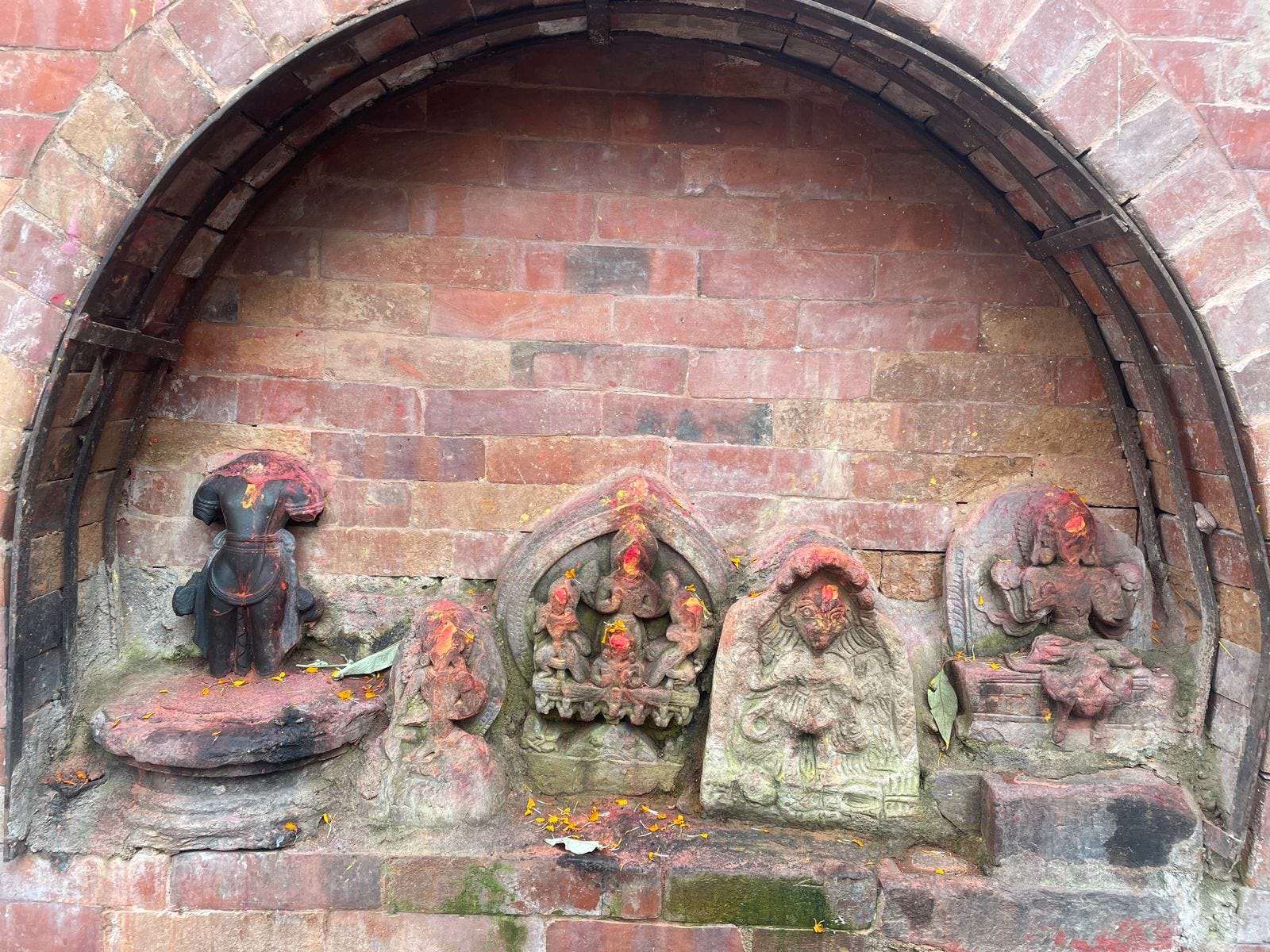
Photo by Nirdishtha Raj SapkotaPeople seem to exist with ancient buildings and old gods with familiarity; the religious spaces exist as community spaces, with people from all ages existing in these spaces with a casualness not found anywhere else.
But you walk around Kathmandu and you see little temples and shrines everywhere. Every corner seems to have some god tucked away, with bells, red powders and flowers all left there for the sole purpose of worshiping these gods. You look closer and you notice that some of these gods or the beautiful carvings adorning the spaces of these gods have worn away: eroded by generations of hands touching those spots, blurring the details.
As you look even closer, you notice that some of the gods are headless. There is red powder, flowers, fruits and other offerings at their feet anyway.
In the US, churches, mosques, temples are all imposing structures. The inside of these spaces might be communal but there is rarely any outside space, people don’t come to these spaces to simply ‘hang out’.
But as you go into any of these spaces, religion takes precedent. We listen to a person reading to us, talking to us, singing with us, but how familiar are we with our God?
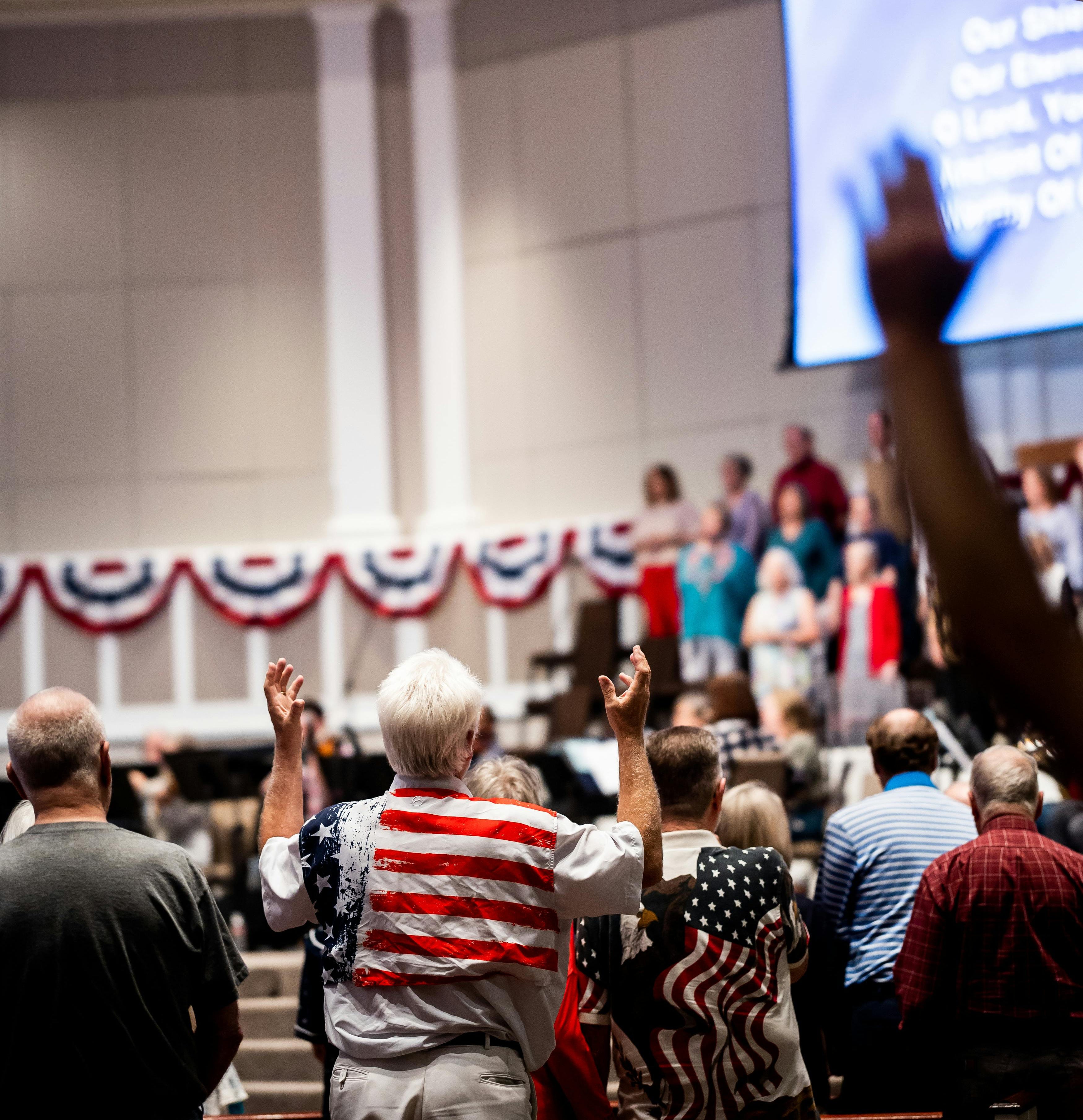
Photo by Caleb Oquendo from Pexels: https://www.pexels.com/photo/people-standing-and-praying-with-arms-raised-on-gathering-17043074/Gods have been physically removed from Nepal for many years, typically to be brought to the global West and sold or displayed as ‘antiques’, God in America has been slowly removed from their homes too.
Religious buildings may exist all over the United States but a different God has precedent over them all. Whether we call it Capitalism or Consumerism or Colonialism, the God worshiped by various religions all over the States have become packaged and sold for various human made beliefs, whether it’s healthcare, politics, collective morality, or whatever else human beings can package.
God in the United States of America has become a tool to use for marketing fuel. God is an easy hook, it keeps us all listening, believers and non-believers alike. God in the USA is worshiped through a screen, large or small, static or moving. From billboards to smart phones, God is all around us and we are watching Him.
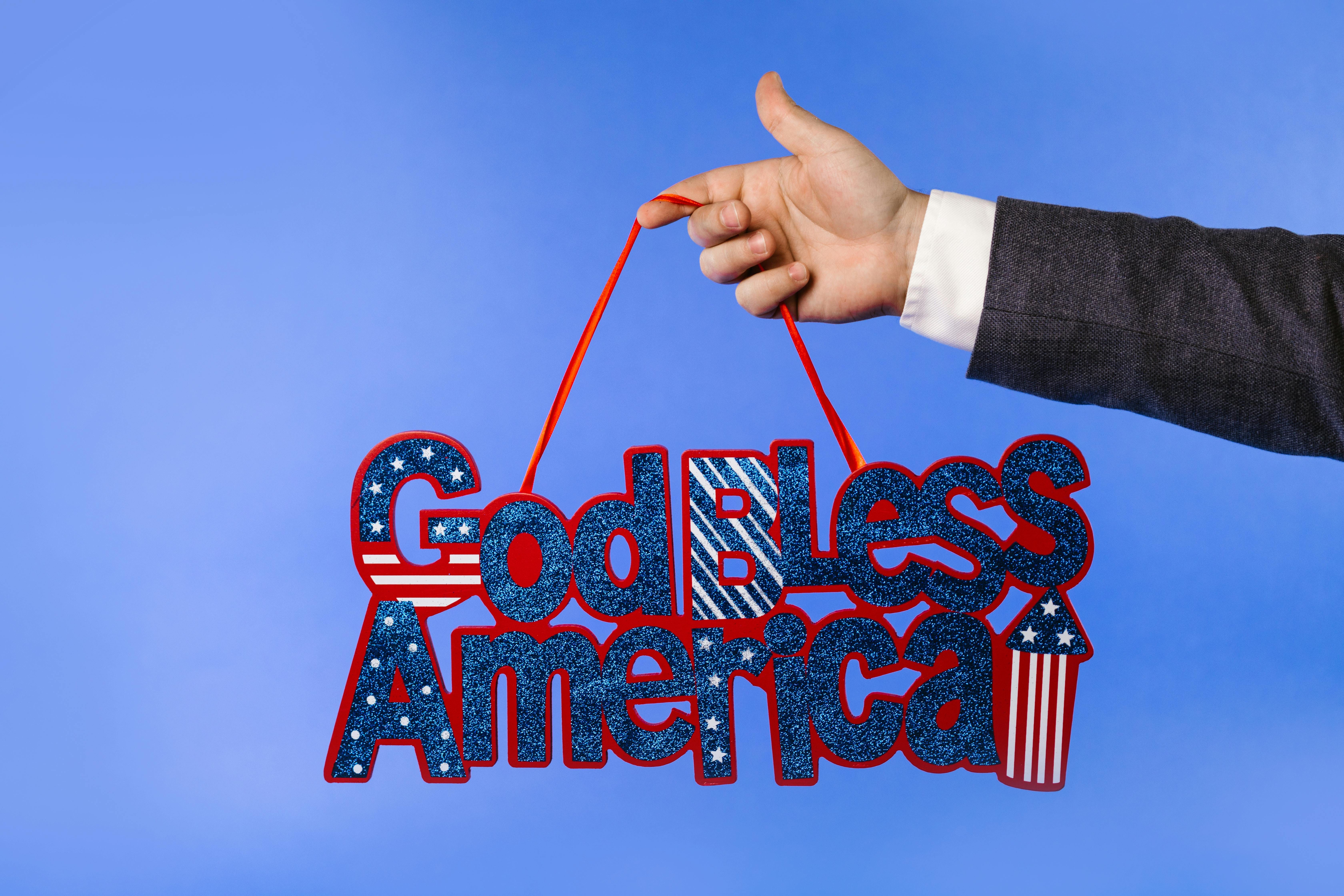
Photo by RDNE Stock project: https://www.pexels.com/photo/text-7997490/When sacred objects or Gods themselves, get removed from their shrines and enter a space that is open to anyone and everyone, who do they belong to?
Cultural theft happens in Nepal and in the US, always packaged to be palatable to the ruling class. While Nepali culture, our gods, our traditions are seen through a museum glass globally, American culture is seen through phone screens.
Everyone has an opinion on if our culture is something we can uphold and safe keep. Whether it’s the culture of governance, or of preservation, our heritage is being scrutinized with outsiders becoming the judges on our morality and our ability.
People see the USA as a lawless land, a land where their children get shot in schools, a land where there are systems in place to cause divisiveness. This divisiveness is usually fueled by ads preaching God and how somehow or the other, God is helping us build these systems of injustice, when God is simply a marketing hook to get people invested.
In Nepal, a country that recently went through a full government upheaval, whose gods have been stolen for generations and criticized by people who look through our heritage through museum glass, our gods have become a marketing hook to attract people to this spiritual land that somehow cannot take care of its gods.
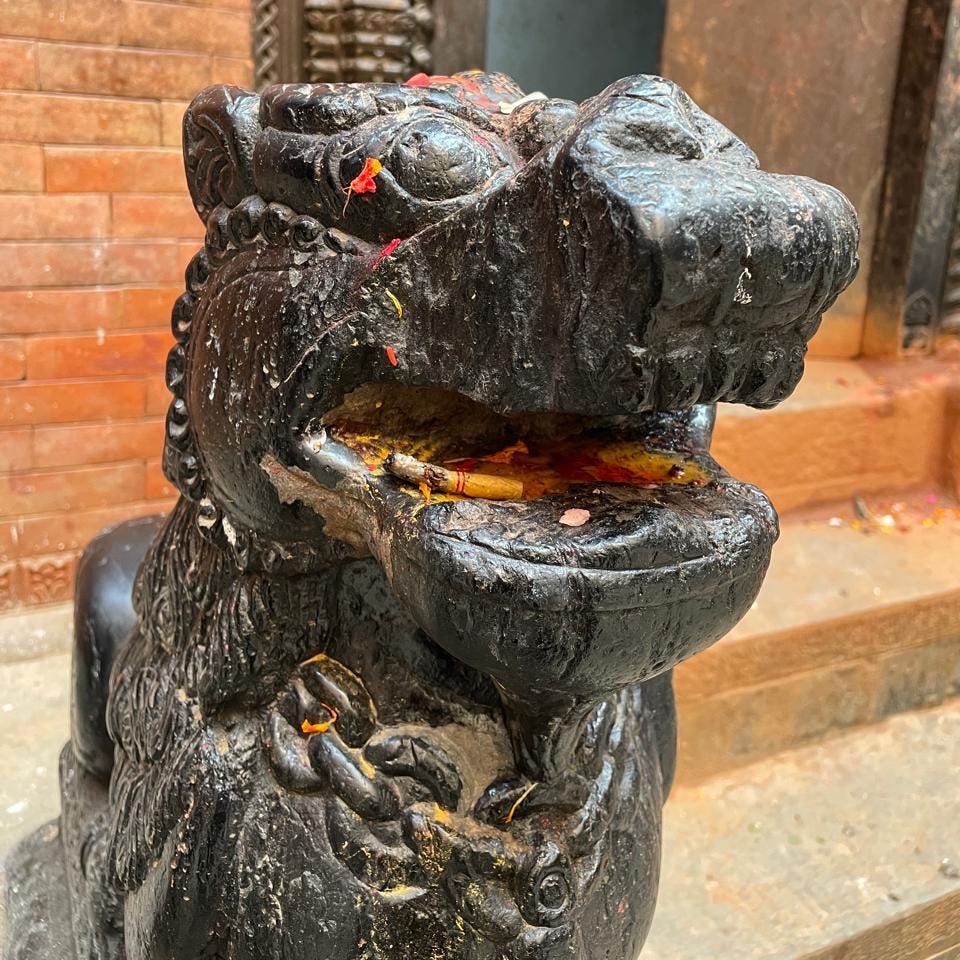
Photo by Nirdishtha Raj SapkotaThe people of both nations seem to have lost their gods to a higher power: the USA to Capitalism and Nepal to Colonizers. Nepal’s god heads are found all over museums and private collections in the USA and there’s plenty of Americans finding god and having spiritual awakenings in Nepal. Both countries have effectively managed to suppress the voices of the indigenous gods that existed before the countries took their present forms. And now with global access whether it’s via the internet or through travel, both countries are under a microscope, fighting to shift the narrative of our countries being incapable of preserving our beliefs.
Nepal has been told that we aren’t able to preserve our heritage, our gods. We are simply too unskilled, too casual with our religion.
The United States has been told that they are godless, lawless, they can’t take care of their people. People are simply too dumb, too selfish.
Whether or not you believe in religion, you have every right to question how religion is being addressed, how it is being gate kept as a form of discrimination, how the gods/God are this higher power who see all and hold us accountable, but who is ruling the gods/God?
But who is to be held accountable when our gods are monopolized, repackaged? Who decides their meaning?
New Essay on The Stooop by @Nirdishtha and they said what they said.